Driving in New Zealand in Summer: A Practical Road Trip Guide
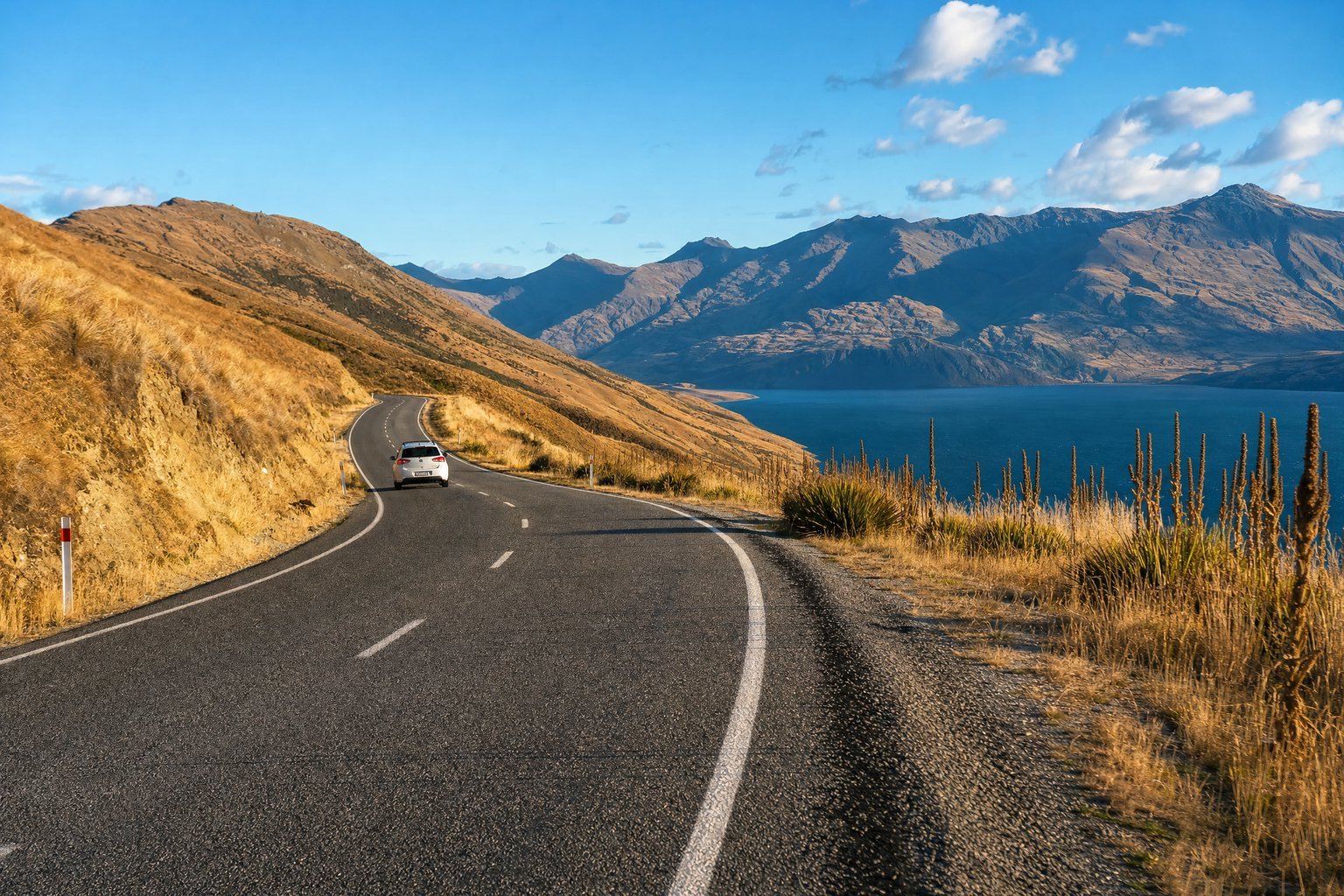
Driving in New Zealand this summer? How to deal with holiday traffic, roadworks and fresh chip seal, strong UV, fire restrictions and freedom camping rules, so your road trip goes smoothly.
Short answer: Summer is the easiest season to drive in New Zealand: no snow chains, dry roads and daylight until about 9pm. It brings its own issues, though. Expect heavy holiday traffic around Christmas and early January, summer roadworks with loose chip on many highways, very strong UV, fire restrictions in dry areas, and freedom camping rules that rule out sleeping in a rental car on most council land. Plan for these and the trip is simple.
When is holiday traffic worst in New Zealand?
The worst traffic is on routes out of Auckland. Last summer, NZTA’s holiday traffic forecasts showed:
- SH1 northbound, Puhoi to Wellsford: busiest from Boxing Day to 30 December, building from about 9am and easing after 3:30pm
- SH1 southbound, Manukau to Bombay: busiest in the days just before Christmas, from mid-morning to late afternoon
- Return traffic: heaviest on the afternoon of 2 January, both into Auckland and around the country
The pattern is similar every year. NZTA usually publishes its holiday traffic maps in December, so check them before you choose a departure time. The simplest fix is to leave before 8am or after 6pm on the busy days. With long summer evenings, a late start still gets you there in daylight.
If you’re heading north of Auckland, part of SH1 is the Northern Gateway toll road. You pay the toll online after your trip, and there’s a signposted free route if you’d rather avoid it.
Why are there so many roadworks in summer?
Warm, dry weather is when road crews can reseal and repair highways, so summer is the main roadworks season. Crews often pause over the Christmas and New Year break, but you’ll still see temporary speed limits and fresh chip seal (loose stones on newly sealed roads).
- Keep to the temporary speed limit, even if no workers are visible. Loose chip can still be on the road.
- Leave a bigger gap behind the car in front. Stones thrown up by other vehicles are a common cause of chipped windscreens.
- Check for delays on the day using NZTA’s live traffic and road information before you set off.
How long can I drive in a day in summer?
Around the solstice in late December, the sun sets at about 8:40pm in Auckland, after 9pm in Christchurch and around 9:30pm in Queenstown. Long days make it tempting to keep driving, but tiredness is a real risk on New Zealand roads, which are often winding and two-lane.
- Take a break about every two hours and swap drivers if you can.
- Plan realistic driving days. A Google Maps time doesn’t include photo stops, coffee or summer traffic.
- Fill up in larger towns before remote stretches. Petrol stations are far apart in parts of the West Coast, Central Otago and the Mackenzie.
How strong is the sun in New Zealand?
Stronger than many visitors expect. NIWA reports that the summer UV Index in New Zealand typically peaks at about 12, and can go above 13 in the far north. Both readings are in the “extreme” range, and you can burn quickly even on a cool or windy day.
- Keep sunscreen, sunglasses and a hat in the car, and apply sunscreen before long walks and beach stops.
- Polarised sunglasses cut glare from wet roads and when driving toward a low sun in the evening.
- Never leave children or pets in a parked car. It heats up quickly, even with the windows down.
- Keep valuables out of sight at beach and trailhead car parks, or take them with you.
Can I light a fire or have a barbecue?
It depends on where you are and when. Fire and Emergency New Zealand moves regions into restricted or prohibited fire seasons as conditions get drier. Before lighting anything outdoors, including at a beach or campsite, check the current status for that area at checkitsalright.nz.
On the road, never throw cigarette butts out of the window, and avoid parking on long, dry grass. A hot exhaust can start a fire.
Can I sleep in my rental car in New Zealand?
Generally, no. On most council land, freedom camping is only allowed in certified self-contained vehicles. Since 7 December 2024, rental vehicles have needed a green self-containment warrant to qualify. Ordinary rental cars aren’t self-contained, and fines apply.
Plan your overnight stops instead:
- Holiday parks have powered and tent sites, kitchens and showers. Book ahead for the Christmas to mid-January period.
- DOC campsites are cheaper, often in great locations, and many allow tents.
- Motels and Airbnb stays fill up early in popular summer spots like Wanaka, Tekapo, the Coromandel and the Bay of Islands.
What should I know about beaches and the outdoors?
- Swim between the flags at patrolled beaches. West coast beaches near Auckland, like Piha and Muriwai, have strong rips. See our day trips from Auckland guide for more on these beaches.
- Check track status before driving to a walk. Some popular tracks close or change after storms, so check the DOC website on the day.
- Pack insect repellent for the West Coast and Fiordland, where sandflies are at their worst in summer.
What car is best for a summer road trip?
Air conditioning is standard across the Yes Rentals fleet, so the choice mostly comes down to people, luggage and fuel:
- Mostly city and short trips: the Toyota Aqua Hybrid, the cheapest to run in stop-start holiday traffic.
- Families with beach and camping gear: the Toyota RAV4 or Highlander.
- Groups: the 7-seat Alphard or a Hiace van.
Every booking includes unlimited kilometres and 24/7 roadside assistance. If something goes wrong on the road, call +64 3 420 2878 and press 3.
FAQ
Is summer a good time to drive in New Zealand?
Yes. Roads are dry, passes are snow-free and the days are long. Plan around holiday traffic and book accommodation early.
What are the worst days for traffic over Christmas?
Typically the days just before Christmas leaving Auckland, Boxing Day to 30 December heading north, and the afternoon of 2 January for return traffic.
Do I need snow chains in summer?
No. Chains are a winter item (roughly June to September). In summer, the bigger risks are tiredness, loose chip and sun.
Can I freedom camp in a rental car?
Not on most council land. Freedom camping there generally requires a certified self-contained vehicle, and standard rental cars don’t qualify. Use holiday parks or DOC campsites instead.
Ready for a summer road trip? Book with Yes Rentals from $15/day with unlimited kilometres, free cancellation and 24/7 roadside assistance, with pickups at Auckland, Christchurch and Queenstown.